
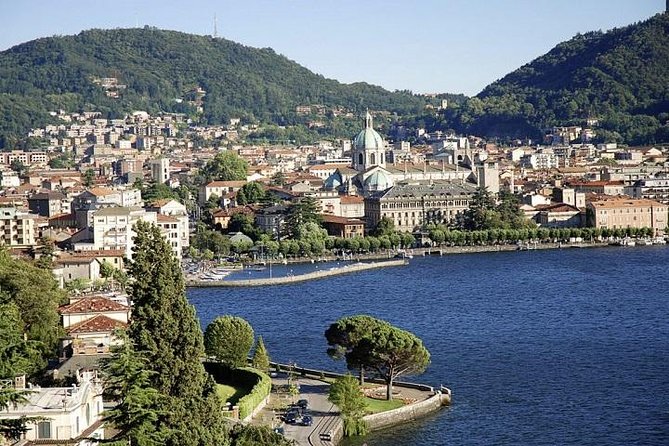
Reviewed · COMO CITY & THE BRUNATE FUNICULAR
Como: Small-Group 2 Hours Walking Tour
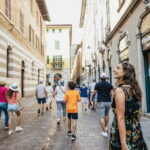
Como is the kind of city that rewards a good walk. This 2-hour small-group tour makes sense of Piazza Cavour and the old town with clear stories and standout sights. I like that the pace is easy, and the guide’s local context turns everyday buildings into something you can actually picture. I also like that you’ll get Lake Como views along the way, not just church facades and stone streets. One consideration: it’s history-forward and mostly outdoors, so wear comfy shoes and don’t expect lots of time inside.
If you’re hoping for an afternoon that helps you get your bearings fast, this works well—especially because the group stays small. The guide role often goes to Nick (you may also see variants like Nic/Niko), and several past groups praised him for connecting Como’s Roman and medieval past to what you see today. If you’re sensitive to pace, note that one past comment mentioned the speed of speech for non-native English speakers, so plan to speak up if you need things repeated.
In This Review
- Key highlights before you go
- The Best Reason to Do This Como Walk: It Makes the Center Click
- Piazza Cavour: A Flood-Prone Square Built on Layers of Time
- Teatro Sociale: Theater Life Inside Walls That Go Back Further
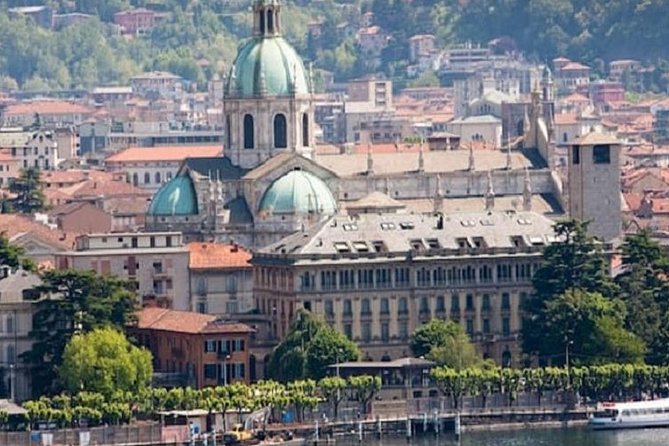
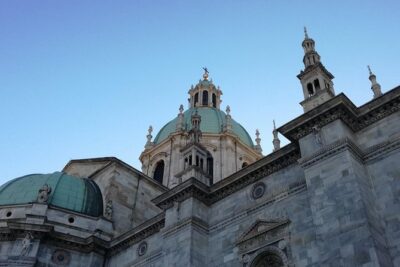
- Cattedrale di Como: One Cathedral, Three Styles
- Basilica di San Fedele: A 7th-Century Start Under Later Layers
- Porta Torre: Como’s 1192 Fortified Entrance (and Why You Can Still Read It)
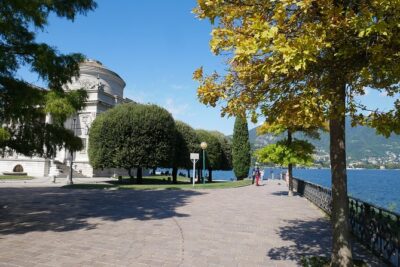
- Lake Como Views: The Promenade Moment You’ll Remember
- Price and Value: What $96.38 Buys You in 2 Hours
- Small-Group Pace: The Real Comfort Factor
- Local Recommendations That Extend Past the Walking Tour
- Where to Meet and How to Start Smoothly
- Should You Book This Como 2-Hour Walking Tour?
- FAQ
- How long is the Como walking tour?
- Where do we meet for the tour?
- What time does the tour start?
- Is the tour in English, and how big is the group?
- Are tickets included for the stops?
- What is the cancellation policy?
Key highlights before you go
- Small-group size (up to 8, with a low cap overall): more back-and-forth and easier sighting of details.
- Piazza Cavour’s layered story: a harbor buried under a “city lounge,” plus fountain history.
- Teatro Sociale in an older shell: 19th-century theater built on older castle structure.
- Stop-by-stop time efficiency: about 20–30 minutes per landmark, paced for an easy 2-hour loop.
- Practical local recommendations: many groups specifically noted food and shop ideas after the tour.
The Best Reason to Do This Como Walk: It Makes the Center Click
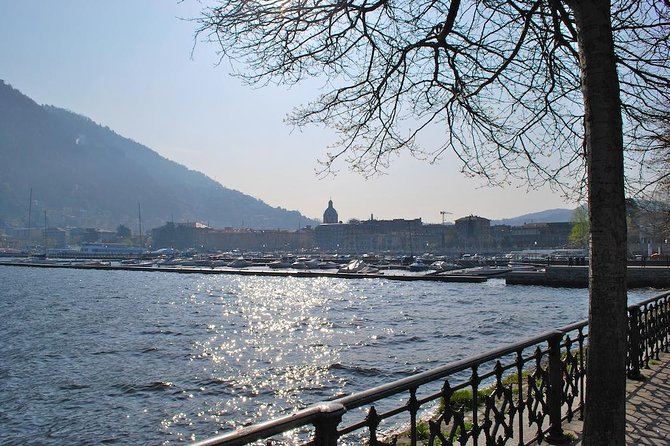
This is a straightforward “old-town orientation” kind of tour. In about 2 hours (starting at 2:00 pm), you cover a tight set of landmarks that explain how Como grew from ancient roots into the city you see now. If your day in Como is limited, this is a smart way to avoid doing the wrong kind of wandering—aimless steps that don’t add up to much.
The value shows in two places. First, the guide helps you connect details you’d otherwise skim past: street-level changes, why buildings sit where they do, and how different eras left their fingerprints. Second, you’re not stuck in a single theme. You’ll bounce between squares, civic architecture, and religious sites—then get the payoff outside with classic Lake views.
One thing to keep in mind: the tour is designed as a walking loop. You’ll be standing and walking most of the time, so it’s best for people who enjoy seeing places up close rather than treating the city like a photo checklist.
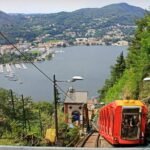
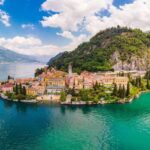
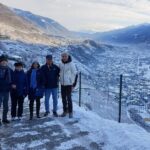
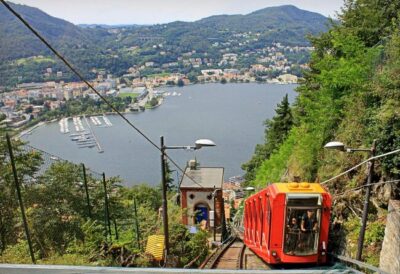
More of Como town and the funicular up to Brunate.

Piazza Cavour: A Flood-Prone Square Built on Layers of Time
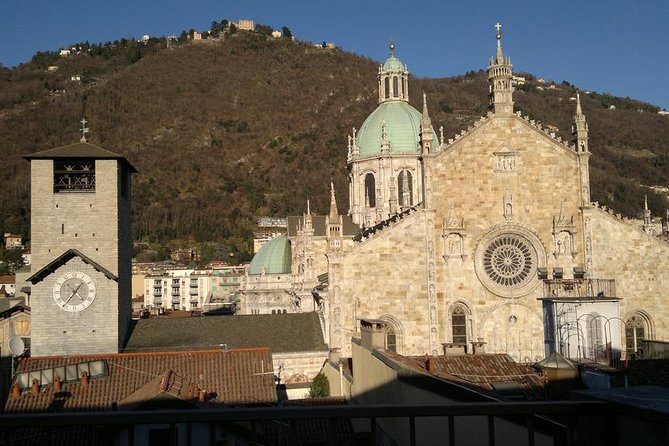
Your first stop is Piazza Cavour, a square that’s basically a history lesson you can walk on. In the 1800s, it didn’t look the way it does now. Back then, the harbor that used to belong here is described as being buried, and over time the square developed into a busy “city lounge” with boutiques and arcades.
It’s the kind of place where the details are the story. The square’s fountain was built in the center in the late 1800s, and later that fountain ended up installed in Bronx Park in New York. You’ll also see the three flowerbeds that were added in the early 1900s—still present today. Tramline tracks appeared, then were replaced by a road, and around the 1950s the square even functioned as a car park.
One very Como-specific detail matters for comfort: Piazza Cavour can flood, since it was constructed on the lake. You’re not here to be “worried,” but it’s useful context. On damp days, the square can feel different than the dry photos.
Practical tip: This is a great stop to ask the guide what to watch for when you’re out on your own, because it sets the pattern for how they’ll read the rest of the city.
Teatro Sociale: Theater Life Inside Walls That Go Back Further
Next up is Teatro Sociale, the city’s well-known theater building. It was designed by Giuseppe Cusi and built in 1811, but here’s the clever part: it used the existing structure of an ancient castle. You can still see original walls, which is a rare treat. Instead of the theater feeling like a one-era monument, it becomes a meeting point between older fortification and 19th-century civic culture.
The first show took place in 1813, and today the theater still functions as a performance space. It’s also used for other major events like ceremonies, weddings, and business gatherings. That means when you look at the building, it isn’t only about the past—it’s still part of how Como runs socially.
You’ll spend about 20 minutes here, which is long enough to understand what you’re looking at without turning it into a sit-and-listen lecture. If you like architecture that shows “second lives” (old structures turned into new functions), this is one of the most satisfying stops on the route.
Cattedrale di Como: One Cathedral, Three Styles
At Cattedrale di Como, the theme shifts to layered religious architecture. The cathedral near Lago di Como is described as one of the most important buildings in the region, and its look is the result of building phases across different historical periods.
That’s why you find Gothic, Renaissance, and Baroque styles mixed together. It’s not always easy to spot the shifts if you’ve never trained your eye, but with a guide, it becomes easier to understand why the cathedral looks the way it does—like the city kept rebuilding and reworking its idea of the sacred space.
Inside, you’ll also hear about sarcophagi tied to bishops Avvocati and Bonifacio da Modena. Even if you’re not a museum person, burial art and memorials often tell you what the community valued at different points in time.
This stop is listed as admission ticket free in the plan, and it’s allotted about 20 minutes, which keeps it manageable. Just expect a quieter, more reflective mood than the square stops.
Basilica di San Fedele: A 7th-Century Start Under Later Layers
Basilica di San Fedele is a central stop dedicated to Saint Fidelis, described here as a martyr. Like the cathedral, it has earlier roots: it derives from an earlier Christian church dating back to the 7th century, originally dedicated to Euphemia.
This is a good place for anyone who likes the “before and after” aspect of historic buildings. The name sounds like a single era, but the description points to a site that was reused and reshaped over centuries—so the basilica works as a lesson in continuity, not just aesthetics.
One key detail for planning: the tour notes admission ticket not included for this stop. So if you want to go in, you’ll likely need to pay your way here. The time you’ll have is about 30 minutes, which gives enough room for a look inside without squeezing everything into the last minute.
Practical tip: If you’re budget-minded, consider deciding upfront whether you’ll prioritize entry at San Fedele versus spending that time simply admiring the exterior and surrounding streets.
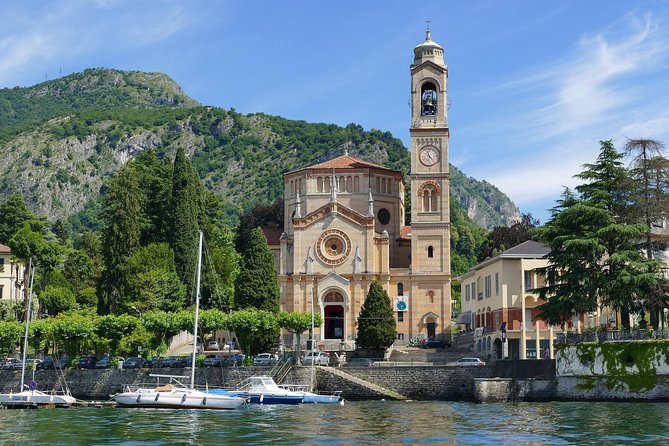
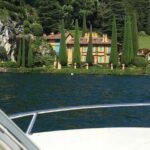
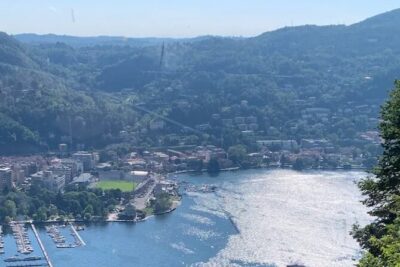
More of the lake villages on foot.

Porta Torre: Como’s 1192 Fortified Entrance (and Why You Can Still Read It)
Your final landmark stop is Porta Torre, also known as Torre di Porta Vittoria. This is a fortified tower built to defend the main entrance of the city. The details are very specific: it was built in 1192, and it stands 40 meters high.
That height and date matter because they instantly anchor the city’s story in something practical—defense, access, and who controlled entry points. When you look at a tower like this, it’s easier to imagine the city as a living organism with boundaries, rather than as a postcard of stone facades.
The tour plan also marks this stop as free admission, and it gives you about 30 minutes. That time is helpful, because towers aren’t always “readable” at a glance. With the guide’s context, you’ll know what you’re looking for and why it was built in the first place.
Lake Como Views: The Promenade Moment You’ll Remember
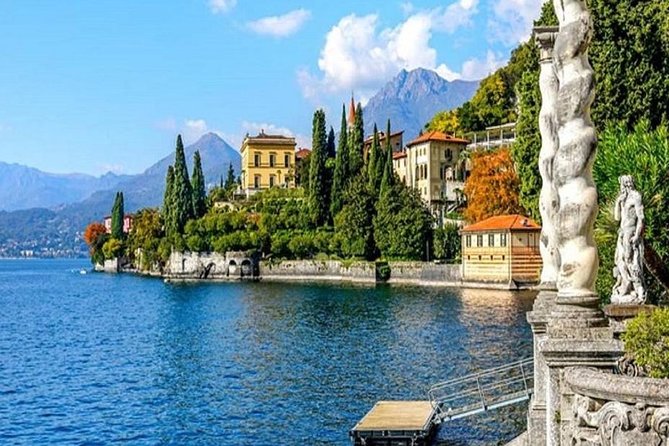
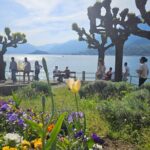
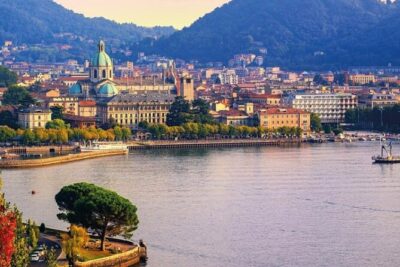
The highlights promise you views of Lake Como and the distant Alps, which is a big part of why Como feels special. Even if your focus is history, don’t skip the outdoor stretches. These view breaks are where you get a sense of scale: the city is framed by water, and the mountains in the distance make everything feel larger than it looks on a map.
This is also where the tour stops being only “about buildings.” You’ll get a sense of how Como’s geography shaped daily life—routes, sightlines, and even why certain areas feel like natural gathering spots.
Tip for photos: If it’s a clear afternoon, the lakeside angles can change quickly. Stay a bit flexible with where you stand, and don’t be afraid to ask the guide which direction is best from that spot.
Price and Value: What $96.38 Buys You in 2 Hours
At $96.38 per person, this isn’t a cheap “wander together” offer. The value is in three things: time, interpretation, and a small-group format.
First, it compresses a lot of Como center into a tight schedule. Two hours is enough to hit major landmarks without turning your day into a logistics marathon.
Second, the guide turns “I’ve seen that before” into “now I get what I’m looking at.” The guide’s stories are described as connecting Roman history to modernity—exactly the kind of context that makes independent sightseeing more rewarding afterward.
Third, the group size matters. The tour is limited to a maximum of 8 people (and the activity notes a low overall cap), which usually means you’re not swallowed by the crowd. That makes questions easier and makes it less likely you’ll miss details when the group pauses.
About tickets: tickets aren’t included overall. Still, several stops are marked free admission (including Piazza Cavour, Teatro Sociale, Cattedrale di Como, and Porta Torre). The main exception in the plan is Basilica di San Fedele, where admission is listed as not included—so budget a little extra if you plan to go in.
Small-Group Pace: The Real Comfort Factor
This tour is designed to be walkable. It’s short enough that most people can do it, but it still requires comfortable shoes. You’ll be moving between landmarks, spending around 20–30 minutes at each stop, and taking in stories as you go.
The best part of a small group is how it changes the feel of the tour. When you’re not packed in, the guide can keep explanations clear and adjust pacing as people ask questions. Multiple past groups highlighted that the tour stays engaging and easy to follow, and that it covers things you might otherwise miss if you walked on your own.
If English isn’t your strongest language, do a quick self-check before you go. One past note mentioned speech pace could be quick for non-English speakers. That doesn’t mean the tour is bad for you—it just means you should be ready to ask for clarification if needed.
Local Recommendations That Extend Past the Walking Tour
One of the most useful parts—based on what people praised—is that the guide often shares practical ideas for where to eat and shop. Past groups specifically mentioned tips for family-run places: coffee spots, a silk shop, a truffle-focused shop, an Osteria, and a wine shop. People also noted gelato recommendations and even help setting up dinner plans.
What I like about this style of add-on is that it’s not random. A good guide bases suggestions on what you’ve already seen, so the recommendations feel connected to your time in Como rather than generic list-building.
How to use this: bring 2–3 questions with you before the tour ends, like what area you should base dinner in or what to try if you want something local but not complicated.
Where to Meet and How to Start Smoothly
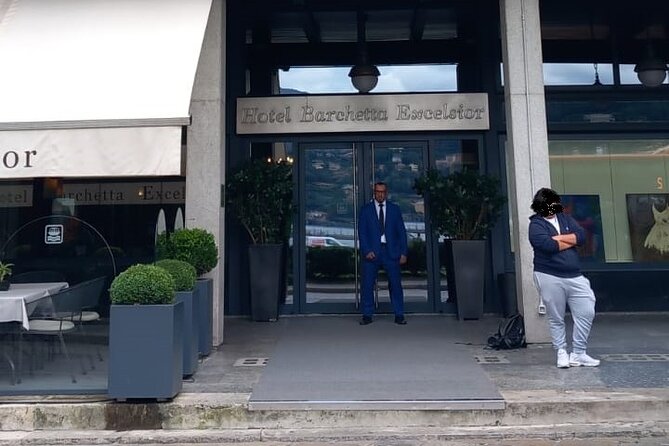
You’ll start at Hotel Barchetta Excelsior, right on Piazza Camillo Benso Conte di Cavour, 1. The meeting point is specifically described as on the carpet in front of the hotel, which is helpful if the square feels busy.
The tour begins at 2:00 pm, and it loops back to the meeting point at the end. That makes timing easier because you don’t need a complex pickup system.
Also note it’s near public transportation, so you can plan to arrive by bus or tram without stress.
Should You Book This Como 2-Hour Walking Tour?
Book it if you want a fast, high-impact way to understand Como’s center. This is especially strong for first-timers who want Roman-to-medieval context without spending all day in transit or hunting for the “right” landmarks.
I’d skip it (or at least rethink) if you’re mainly looking for long museum time or you hate walking in the afternoon. Also, if you’re hoping every stop is fully ticketed-in, note that Basilica di San Fedele’s entry isn’t included in the plan.
One more smart move: arrive a few minutes early at the carpet in front of Hotel Barchetta Excelsior. A couple of low-score experiences referenced guide issues, and being early helps you avoid the kind of confusion that creates a bad start.
FAQ
How long is the Como walking tour?
The tour lasts about 2 hours.
Where do we meet for the tour?
Meet at Hotel Barchetta Excelsior, on the carpet in front of the hotel at Piazza Camillo Benso Conte di Cavour, 1, 22100 Como.
What time does the tour start?
The start time is 2:00 pm.
Is the tour in English, and how big is the group?
The tour is offered in English. It’s a small group, limited to a maximum of 8 people (the activity also notes a maximum of 15 travelers).
Are tickets included for the stops?
Tickets are not included. Several stops are marked free admission, but Basilica di San Fedele is listed as admission ticket not included.
What is the cancellation policy?
You can cancel for a full refund if you cancel at least 24 hours before the experience start time. Free cancellation is available up to that cutoff.
More Lake Como Tours





More of Como and Brunate

More Tour Reviews in Lake Como

Prefer something else? More ways to fill a day around Lake Como and its shore villages



Como City & the Brunate Funicular, compared.
 ★ 4.8Food Walking TourFrom $93150 reviews
 ★ 5.0Como city and its History Exclusive Walking Tour (1 h from Milan)From $8441 reviews
 ★ 4.3Guided City TourFrom $4334 reviews
 ★ 4.5Como Walking Tour with Audio and Written Guide by a LocalFrom $730 reviews
 ★ 4.5Como Brunate Torno. The Breathtaking SceneryFrom $21619 reviews
 ★ 4.0The Grandeur Of Como: Villa Olmo and Brunate FunicularFrom $25214 reviews
 ★ 5.0Private Transfer from Como City to Milan AirportsFrom $47513 reviews
 ★ 5.0Exclusive wine tasting in BrunateFrom $15010 reviews
Browse the lists this tour appears in